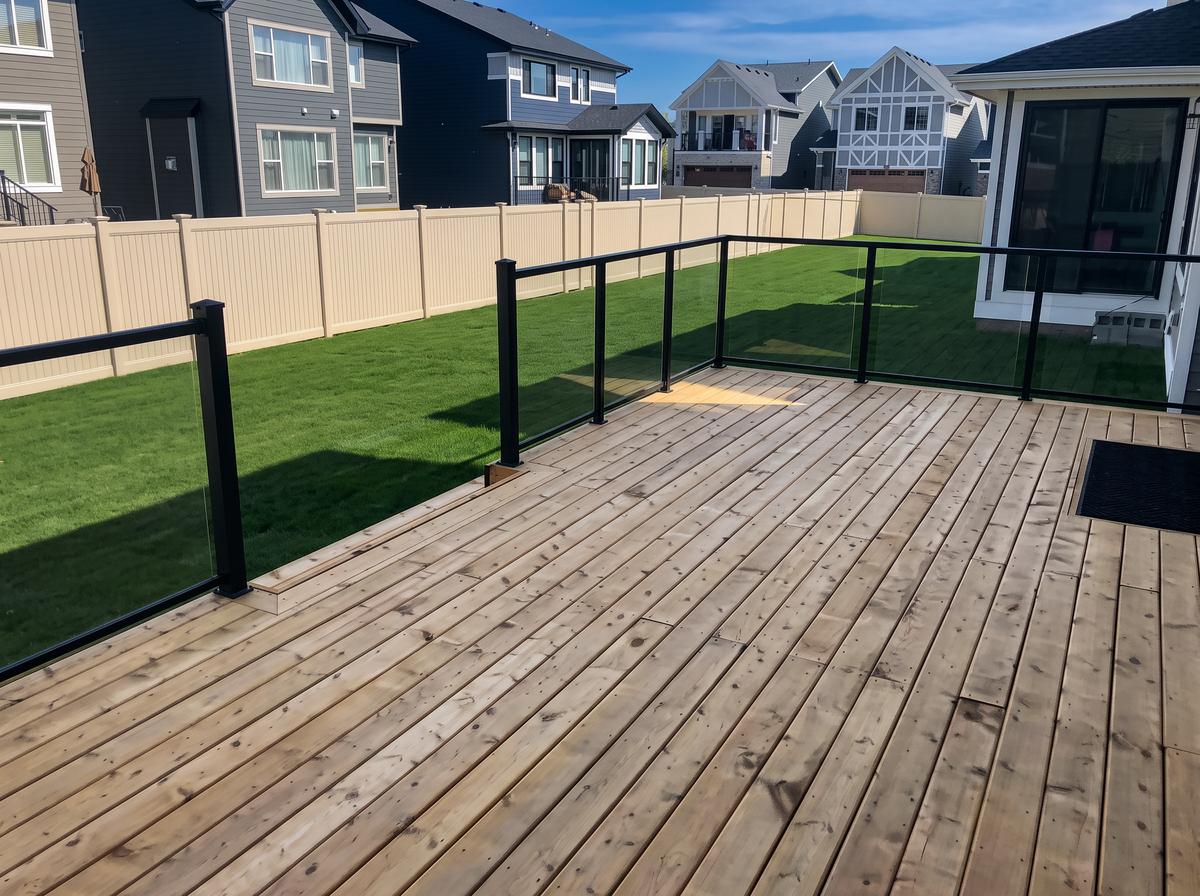
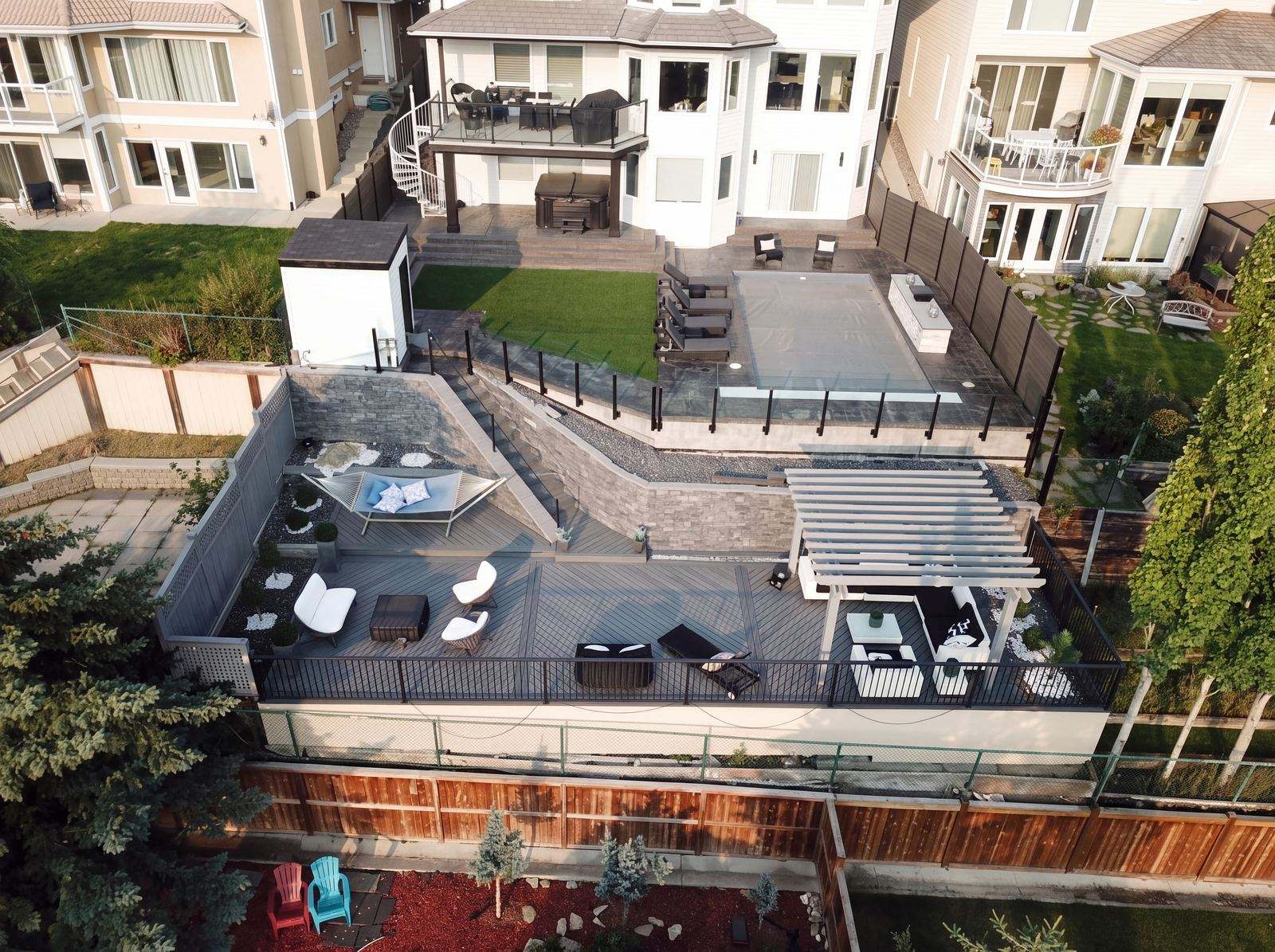
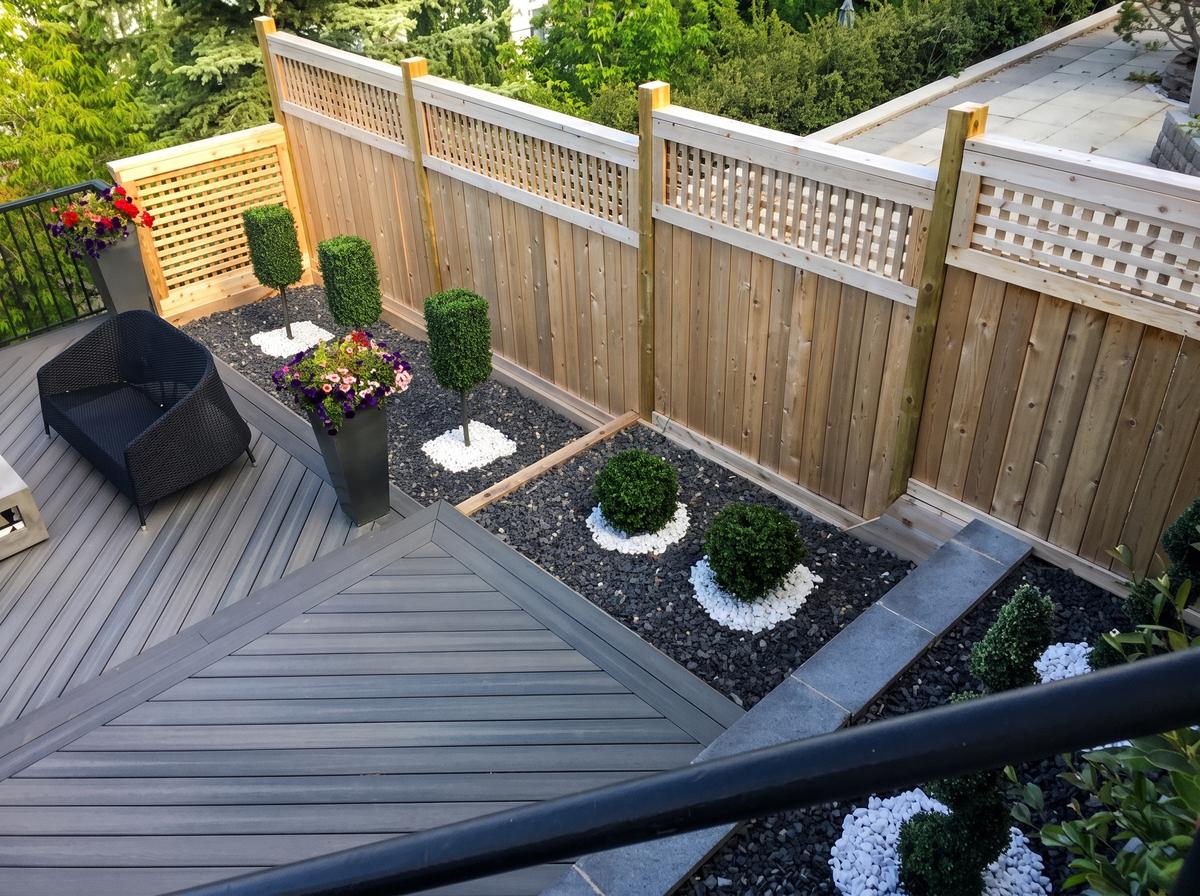
Cedar vs Pressure Treated Deck: What It Actually Costs in Calgary
Most comparisons of cedar and pressure treated decking are written for somewhere that isn't Calgary. They don't account for a climate that swings thirty degrees in a day, or for a building season short enough that rebuilding a deck is a genuine inconvenience rather than just an expense.
Here is what the two materials cost to build here, how long each lasts through Alberta freeze-thaw, and what you'll actually spend keeping them looking right.
The short version. Pressure treated is cheaper to build. Cedar looks better and costs about 20–30% more. Neither lasts as long as most people expect — plan on 15 to 20 years for either one in this climate.
What you shouldn't do is choose cedar expecting it to outlast pressure treated by a wide margin. Here, it won't.
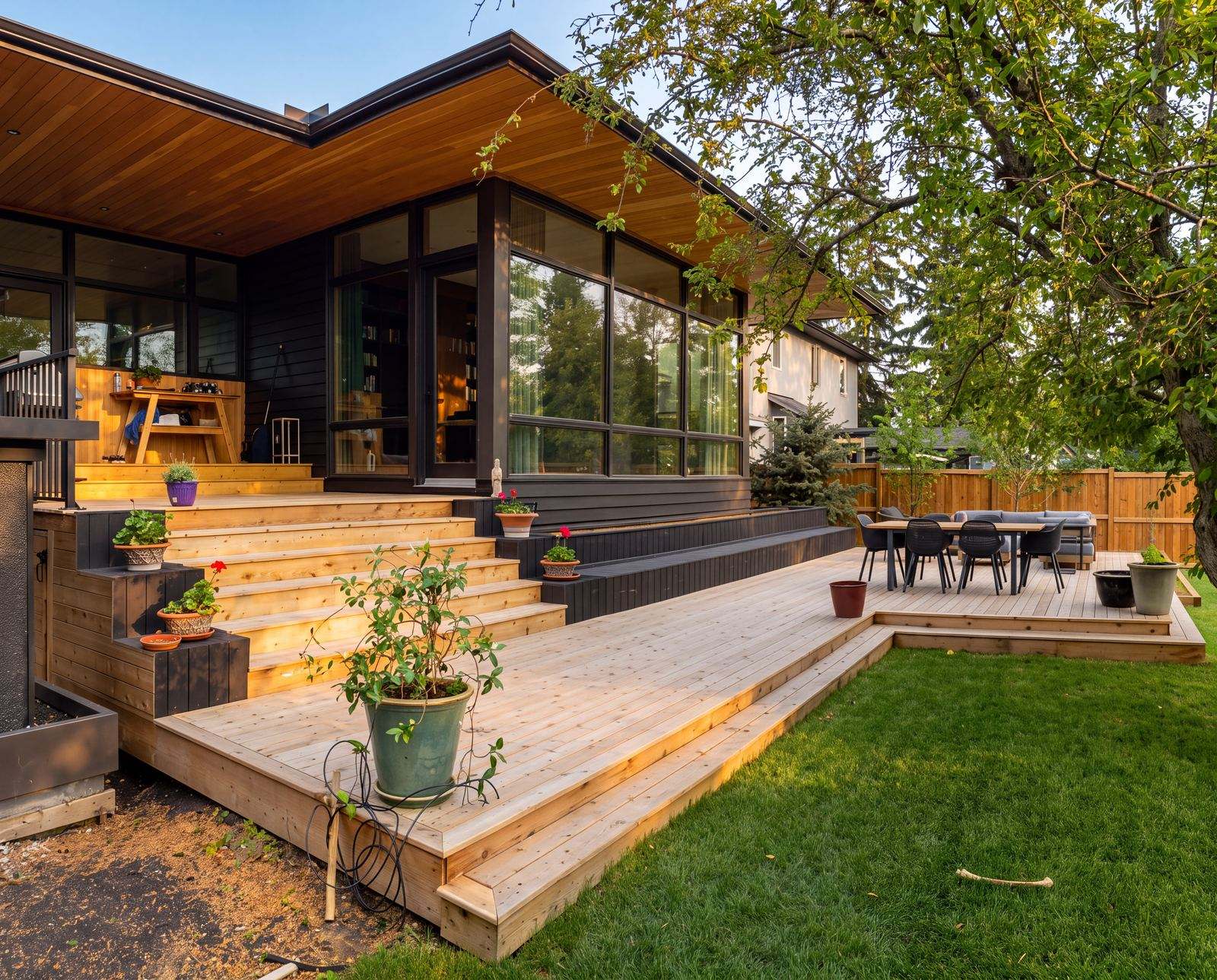
What each costs installed in Calgary
These are our own installed prices as of autumn 2026 — materials, labour, frost-depth footings and finishing. Not material-only numbers off a big-box shelf.
| Material | Per sq ft | 400 sq ft deck | Premium |
|---|---|---|---|
| Pressure treated | $28 – $35 | $11,200 – $14,000 | — |
| Cedar | $36 – $42 | $14,400 – $16,800 | +20–30% |
Ranges reflect deck height, number of levels and corners, site access, excavation and railing choice.
On a typical 400 square foot deck the gap is around $3,000. Real money, but smaller than most people assume before they ask.
A simple ground-level rectangle sits at the bottom of each range. A raised, multi-level deck with a stair run and glass railing sits at the top.
How long each lasts here
Both give you 15 to 20 years in Calgary before replacement becomes more sensible than continued repair.
That surprises people who've read that pressure treated lumber lasts forty years. It can — in a mild, dry climate, on a structure that stays out of the weather. A Calgary deck is a different proposition.
Chinooks put us through freeze-thaw cycles repeatedly across a winter rather than one long freeze. Every cycle works moisture into the wood, then expands it. That's what opens checks in the boards, lifts fasteners, and eventually makes a deck feel loose underfoot.
Cedar is naturally more rot-resistant than pressure treated pine, which is why it's often sold as the longer-lasting option. In practice the difference here is small — what limits a Calgary deck usually isn't rot. It's the mechanical wear of that expansion and contraction, and that affects both species.
What upkeep actually costs
This is where the two genuinely separate, and it's the part most cost comparisons leave out.
| Material | Refinish every | Per refinish (400 sq ft) | Over 15 years |
|---|---|---|---|
| Pressure treated | 1 – 3 years | $500 – $900 | 5 – 8 refinishes |
| Cedar | 2 – 3 years | $500 – $900 | 5 – 7 refinishes |
Professional rates. DIY runs about $150 in product plus a weekend. Intervals are industry standard ranges, not our figures.
Pressure treated
Needs a clear sealer every one to two years, or a semi-transparent stain every two to three. It also has to dry out before its first finish — a newly built pressure treated deck holds a lot of moisture from the treatment process and won't take stain properly until it's had a season.
Cedar
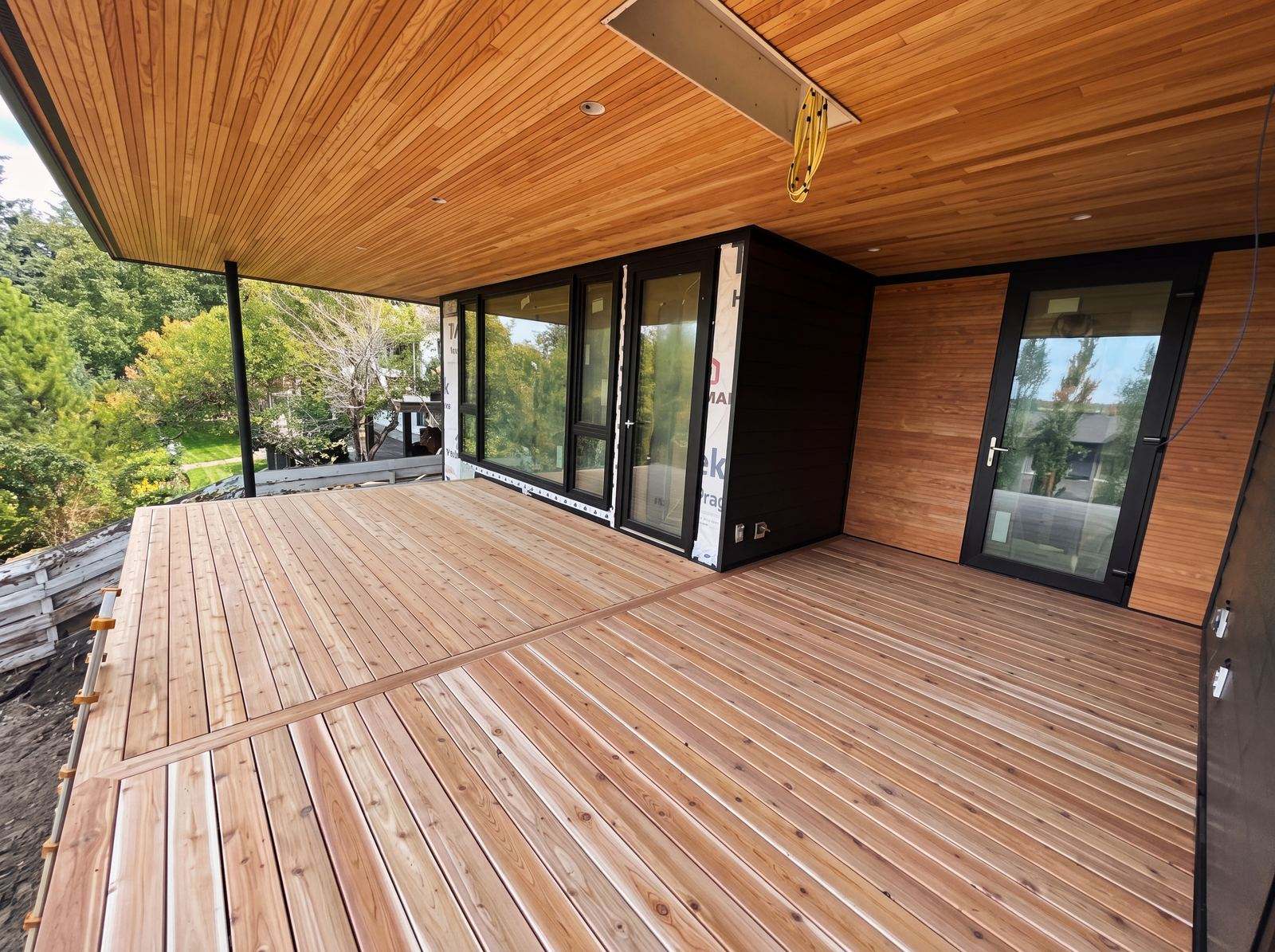
Holds a finish slightly better and typically wants staining every two to three years. Left unfinished it weathers to a silver-grey that some people specifically want. That's a legitimate choice about appearance — not a way to skip maintenance. Unfinished cedar still loses surface integrity over time.
Two Calgary factors that shorten both intervals
Sun exposure. We get a lot of clear days, and at our elevation the UV load on a finish is higher than in most of the country. A south-facing deck typically needs refinishing a full year sooner than a shaded north-facing one.
Chinook cycling. Repeated wet-dry and freeze-thaw swings are harder on a surface finish than a steady cold winter.
A reliable field test. Pour a cup of water on the boards. If it soaks in within about thirty seconds instead of beading, the finish is done.
So which should you build?
Pressure treated
Budget is the constraint, or you're moving within ten years and want the lowest sensible spend. You won't be there for the rebuild.
Cedar
You want the warmer colour and tighter grain, and you accept staining it every two to three years for as long as you own it.
Composite — if you're staying
Both woods above get rebuilt once inside thirty years. Composite doesn't, which makes it the cheapest of the three to own — and there's nothing to stain.
That last one surprises people, so we ran the numbers properly. On a 400 square foot deck over thirty years, pressure treated costs $22,400–$28,000 and cedar $28,800–$33,600 — because both get built twice. Composite comes in at $16,800–$23,200, built once, before you count a single tin of stain.
Full breakdown in Composite vs Wood Decking: The 30-Year Cost in Calgary.
Getting it built
We build cedar, pressure treated and composite. Between the two woods we'll tell you straight which suits your project — we've no reason to push you to the pricier timber if it isn't right for the deck you're describing.
Ask us what we'd build at our own house, though, and the answer is composite. See cedar deck installation, pressure treated deck installation or composite deck installation.
Get a price on your deck
We'll quote your actual site in both materials so you can compare real numbers.
Get My Free Quote